
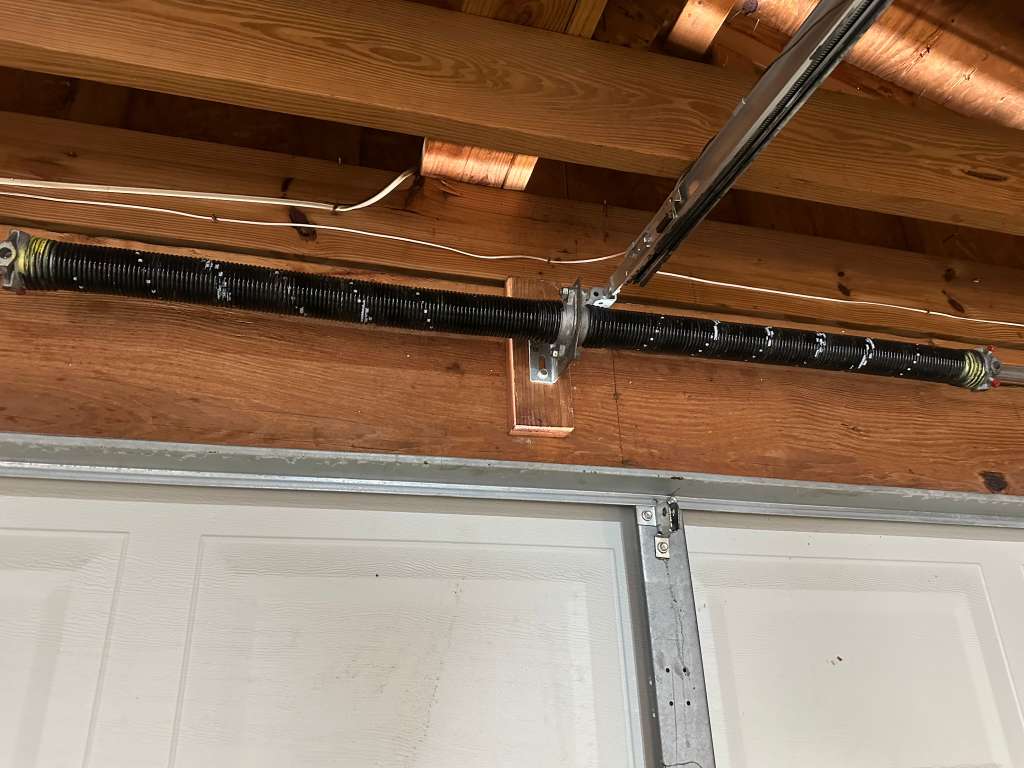
Garage door tune-ups are the dental cleaning of home maintenance. Everybody knows they should get one. Almost nobody actually does. Then one cold morning the spring snaps, the door comes down on the car, and the routine tune-up that would have caught it turns into an emergency repair that costs many times more.
We do tune-ups every single day across Nassau County, the rest of Long Island, NYC, Houston, and Cleveland. Here’s the honest reality of what a tune-up is, what it isn’t, and when you actually need one — versus when you’re being sold something you don’t need.
What an actual tune-up includes
A real residential garage door tune-up is a structured inspection plus minor adjustments. It is NOT a sales appointment in disguise. Here’s what a Garavex tune-up covers — 14 checkpoints, about 25 minutes:
Springs
- Cycle balance test — Pull the emergency release, lift the door manually, see if it stays open at half-height. A balanced door stays. An unbalanced door tells you the spring is fading.
- Visual inspection of coils — Look for rust, gaps in the coil winding, and stretched sections. Each is an early warning of imminent failure.
- Spring lubrication — Light silicone spray, NOT WD-40. WD-40 is a solvent and strips long-term lubrication.
Cables and drums
- Cable inspection — Run a gloved hand along each cable looking for frayed strands, kinks, or rust pitting.
- Drum check — Both drums (top corners) should look identical. Uneven wear means the door is putting more weight on one side.
Rollers and hinges
- Roller bearing test — Spin each roller by hand. They should spin freely. Builder-grade plastic rollers go bad around year 5; we replace them with sealed nylon rollers that last 15+ years.
- Hinge inspection — Every joint between panels has a hinge. We look for hairline cracks (especially at the corners — they propagate fast).
- Hardware tightening — Every bolt that holds the track to the wall, the hinge to the panel, and the bracket to the door. Vibration loosens them over years.
Tracks
- Track alignment — Sight down each track. Should be perfectly parallel and plumb.
- Track cleanout — Dirt, dead bugs, and stray screws cause grinding and accelerate roller wear.
Opener
- Travel limit test — Door should close to floor without reversing, open to fully up without slamming the stop.
- Force sensitivity test — Place a 2x4 flat under the closing door. The door should bounce up the moment it touches. If it doesn’t, the safety reverse is failing and someone could get hurt.
- Photo eye sensors — Lenses get dirty, brackets get bumped. We clean and realign.
- Battery backup test (if equipped) — Run a simulated power outage to make sure it actually engages.
End-of-visit deliverable: a written report telling you which parts are healthy, which have life left but should be flagged for next year, and which need replacement now. With written prices for any work you might want to authorize (no pressure — you decide).
How often you actually need one
The honest answer depends on usage and climate. Here’s the real breakdown:
| Usage profile | Tune-up frequency | Why |
|---|---|---|
| Average family (2 cars, 4 cycles/day) | Annually | Standard wear curve — catches problems before failure |
| Single driver (2 cycles/day) | Every 18 months | Slower wear, can stretch the interval |
| Heavy use (kids in sports, work-from-garage, 8+ cycles/day) | Every 6 months | Springs and rollers wear 2–3x faster |
| Coastal / salt air / Cleveland winters | Annually + cold-weather prep in October | Salt corrosion accelerates spring and cable failure |
| Houston (heat + humidity + hurricane risk) | Annually + post-hurricane check | Wind load and heat stress on hardware |
The “every 6 months” recommendation you sometimes see online is from companies trying to sell you twice as many tune-ups. For most Nassau County and NYC households, once a year is the sweet spot.
The 5 warning signs that mean don’t wait
If any of these are happening, don’t schedule a tune-up “sometime soon.” Schedule it this week:
1. The door is making sounds it didn’t make six months ago
Grinding, popping, creaking, chattering — these are the door telling you something. The longer you wait, the more it costs.
2. The door feels heavier or slower
Pull the emergency release and lift it by hand. If it fights you or wants to fall closed, your spring is losing tension. A spring near end-of-life is at most months from snapping.
3. You can see a visible gap in the spring above the door
Healthy spring coils touch each other in tight, even spacing. A gap = days or weeks from failure.
4. The door hangs slightly crooked or one side moves faster than the other
Cable issue, drum wear, or one spring is weaker than the other. Either way, an imbalanced door overloads the rest of the system and accelerates everything else.
5. The opener motor strains, smells hot, or buzzes
The opener is fighting something. It’s not designed to lift the full weight of the door — the springs are. If your opener sounds like it’s working hard, the springs aren’t.
Why people skip tune-ups (and why they shouldn’t)
Three reasons most homeowners never get a tune-up:
1. Their door “works fine” — Garage doors typically work fine right up until they don’t. The 6-week warning window before failure is short, subtle, and easy to miss. Most homeowners notice the warning sign on the way to work, mentally file it for “later,” and the door snaps that weekend.
2. They assume it’s a sales trap — Some companies do use tune-ups as upsell appointments. A real tune-up should be a flat published rate, deliver a written checklist, and the tech should leave without pushing additional work. Ask for the written report before you book — if they can’t show you a sample, they’re using “tune-up” as a euphemism for “in-home pitch.”
3. They’ve never had a major failure — If you’ve never had a 6 AM spring snap, you don’t viscerally understand what tune-ups prevent. The customers who religiously book annual tune-ups are almost always people who had one bad emergency in the past.
The math is straightforward: the cost of a single avoided emergency repair (one snapped spring + the resulting cable damage + the opener strain that builds up running an unbalanced door for weeks) typically covers several years of routine tune-ups. Annual maintenance isn’t a cost — it’s a hedge.
Tune-ups in Nassau County and the rest of Long Island
If you’re in Nassau County specifically (or anywhere on Long Island), a few local factors push toward annual tune-ups:
- Salt air — Even inland Nassau gets salt-affected air from the Atlantic and the Sound. Cables and springs rust 30–50% faster than the national average.
- Cold winters — Spring failure clusters in January. Pre-winter tune-ups in October catch the springs that won’t make it through.
- Older housing stock — Nassau has a lot of 1960s–80s homes with original undersized headers, builder-grade hardware, and outdated openers. Annual checks catch the slow-decay issues that newer homes don’t have yet.
We send a Long Island-based tech for every tune-up in Nassau County — same crew you’d see if you had an emergency. Most tune-ups in the area are booked into 8 AM, 10 AM, or 2 PM slots so they don’t disrupt your day. Curbside parking is usually fine; we don’t need access to the inside of your house.
What about DIY?
Honest answer: about 60% of a tune-up you can do yourself if you’re handy. The other 40% requires training or specific tools.
What you can DIY (every 3 months)
- Lubrication of rollers, hinges, springs with silicone spray
- Visual inspection for visible damage
- Cleaning the photo eye sensor lenses
- Wiping down tracks
- Testing the safety reverse with a 2x4
What you should NOT DIY
- Spring tension adjustments
- Cable replacement or rewinding
- Drum bearing replacement
- Opener limit and force settings
- Any work that requires releasing tension on the spring
The DIY portion handles surface maintenance. The pro portion handles the mechanical assessment that prevents catastrophic failure. Both have value — they’re not substitutes.
How to find a good tune-up service
Whether you book us or someone else, three things to look for:
- Clear written quote up front — You should know the price before they show up, not after. If a company refuses to quote without seeing the door, that’s a red flag.
- Written checklist included — They should show you the standard checklist BEFORE you book, so you know exactly what you’re paying for.
- No pressure to add work — If anything is found, you should be quoted in writing, allowed to think about it, and never feel cornered into authorizing same-day work.
If a company resists any of these three, find another company.
What our tune-up includes
Everything in the 14-point checklist above. Takes 25–30 minutes. Includes a written report at the end so you know exactly what was checked, what’s healthy, and what to keep an eye on going forward.
Tune-ups are not where we make our money. They’re how we build long-term relationships with homeowners — the kind that turn into spring replacements 5 years later and new door installs 10 years after that. We’d rather have a customer for 15 years than make a quick markup once.
Book it
Call (855) 634-5995 or request a tune-up online and we’ll text you back with available slots within 15 minutes. We hold dedicated tune-up slots every weekday morning so you don’t have to wait days for a non-emergency.
If your door is making noises it didn’t used to make, has a visible spring gap, or feels heavier than it should — please don’t wait until the spring is on your floor and your car is trapped inside. Annual tune-ups exist precisely to keep that morning from being yours.